
Have you ever run your hand across a smooth granite countertop and wondered how a rough slab of stone turns into something so polished and precise? It might look simple once it is installed in your kitchen or bathroom, but the journey from quarry to countertop is anything but basic.
If you are planning a remodel or just curious about the process, understanding how granite fabrication works can help you appreciate the craftsmanship behind every cut and polished edge. Let’s walk through the entire process in a clear and practical way.
What Is Granite and Why Is It So Popular
Granite is a natural igneous rock formed from cooled magma deep beneath the Earth’s surface. It is made mostly of quartz, feldspar, and mica, which give it strength and unique color patterns.
Granite has been used in construction for centuries. Famous landmarks such as Mount Rushmore are carved from granite because of its durability. In modern homes, granite is especially popular for countertops.
According to the Natural Stone Institute, natural stone continues to be widely used in residential kitchens due to its durability, heat resistance, and long lifespan. Granite is known for:
- High resistance to heat
- Strong scratch resistance
- Unique natural patterns
- Long term durability
These qualities make it ideal for high traffic areas like kitchens.
Step One: Quarrying the Stone
To understand how granite fabrication works, you first need to look at where it begins. Granite is extracted from quarries using large cutting machines and controlled techniques. Instead of blasting with explosives, which can damage the stone, many quarries now use diamond wire saws to cut large blocks cleanly.
These blocks can weigh several tons. After extraction, they are transported to processing facilities where they are cut into large slabs, usually about 2 to 3 centimeters thick.
Each slab is unique because granite is a natural material. No two pieces have exactly the same pattern.
Slab Selection and Inspection
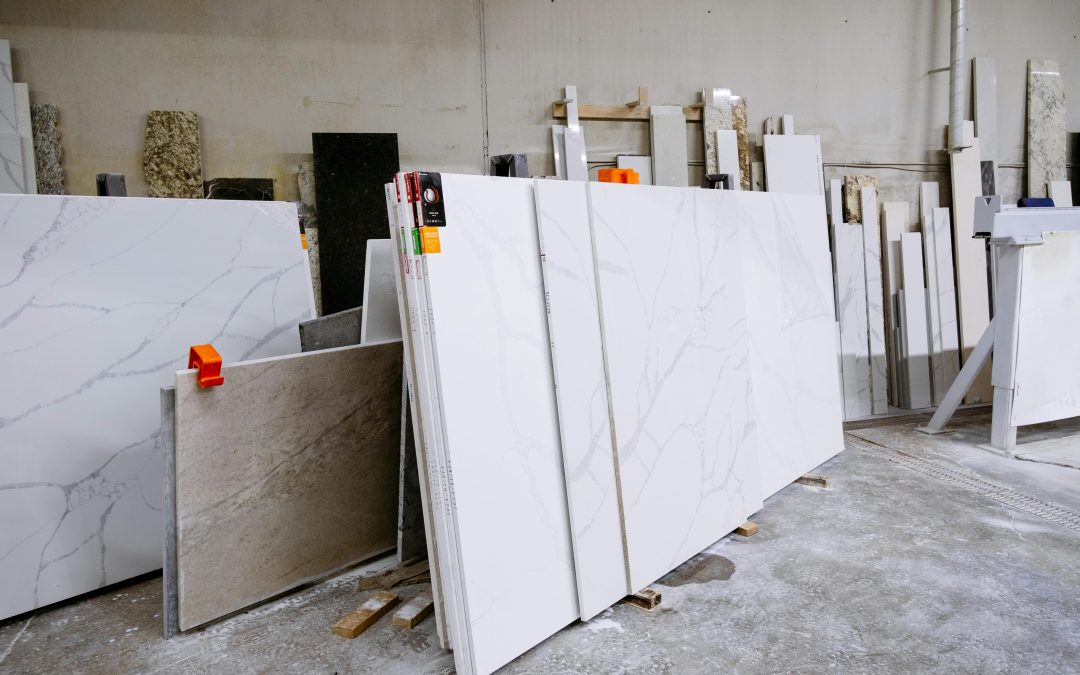
Once slabs reach the fabricator, they are inspected for quality. Fabricators check for cracks, weak spots, and consistency in color.
If you are a homeowner, you may visit the supplier to choose your exact slab. This step is important because the pattern you see in the slab will determine how your finished countertop looks.
At this stage, understanding how granite fabrication works helps you see why viewing the full slab matters. Small samples do not always show the full movement or veining of the stone.
Measuring and Templating
Before any cutting begins, precise measurements are taken from your space. Fabricators often create a template of your cabinets using digital tools or physical materials.
Templating ensures that:
- The countertop fits perfectly
- Sink and cooktop openings are accurately placed
- Seams are minimized and properly positioned
Digital templating systems have improved accuracy in recent years. Laser measuring tools reduce errors and speed up the process.
This careful preparation is a key part of how granite fabrication works because even a small measurement mistake can lead to costly corrections.
Cutting the Granite Slab
Once measurements are finalized, the slab is cut to size. This is typically done using large bridge saws equipped with diamond blades. Diamond is used because granite is extremely hard and requires a strong cutting material.
The fabricator carefully follows the template layout on the slab. They also consider how the natural pattern flows across the surface, especially if multiple pieces are joined together.
Openings for sinks and cooktops are cut during this phase. Precision is critical to ensure a snug fit during installation.
Shaping and Edge Profiling
After the main cuts are complete, the edges are shaped. This is where style choices come into play. Common edge profiles include:
- Straight edge
- Beveled edge
- Bullnose edge
- Ogee edge
Each profile is shaped using specialized grinding tools. The choice of edge can influence the overall look of your kitchen. A simple straight edge offers a modern feel, while a more detailed edge adds a traditional touch.
This stage adds both aesthetic appeal and safety by smoothing sharp corners.
Polishing the Surface
Granite slabs are polished using a series of progressively finer abrasives. This process enhances the natural color and creates the glossy finish most people associate with granite.
Some homeowners prefer a honed finish, which is matte rather than glossy. The finish is chosen based on personal preference and design style.
Polishing not only improves appearance but also helps seal microscopic pores in the stone, making it more resistant to staining.
Understanding this finishing stage gives you a clearer picture of how granite fabrication works beyond simple cutting.
Sealing and Quality Control
Although granite is durable, it is still a natural stone and can be porous. Most fabricators apply a penetrating sealer before installation. This helps reduce the risk of stains from liquids like oil or wine.
Quality control checks are done before the slab leaves the shop. Fabricators inspect:
- Edge smoothness
- Surface consistency
- Accuracy of cutouts
- Overall finish
Only after passing inspection is the countertop ready for delivery.
Installation in Your Home
Installation day is the final step in how granite fabrication works. The prepared pieces are carefully transported to your home. Granite is heavy, so proper handling is essential to prevent cracks.
Installers place the slabs on top of cabinets, ensure they are level, and secure them with adhesives. Seams are joined with color matched epoxy to create a smooth appearance.
Once installed, the countertop is cleaned and sometimes sealed again. In many cases, you can begin light use within 24 hours.
Maintenance and Longevity
One reason granite remains popular is its long lifespan. With proper care, granite countertops can last decades.
Basic maintenance includes:
- Wiping spills promptly
- Using mild soap and water for cleaning
- Resealing periodically as recommended
According to industry professionals, resealing may be needed every one to three years depending on usage and the specific stone.
When maintained correctly, granite retains its beauty and structural strength over time.
The Craftsmanship Behind the Stone
What stands out most about how granite fabrication works is the combination of technology and skilled craftsmanship. While machines handle heavy cutting and polishing, experienced fabricators make crucial decisions about layout, pattern alignment, and finishing details.
Each countertop is custom made. Even in a world of mass production, granite fabrication remains a personalized process tailored to each space.
Final Thoughts on Choosing Granite
If you are considering granite for your home, understanding how granite fabrication works gives you confidence in the process. You now know that it involves careful quarrying, precise measurement, skilled cutting, detailed finishing, and professional installation.
It is not just about placing a slab on cabinets. It is about transforming raw stone into a functional and beautiful surface designed to last for years.
When you see your finished countertop, you will know the journey it took from deep within the Earth to the heart of your home.